
How to Avoid PENURY

penury-cool-words-vocabulary-for-students

If you get an allowance, chances are you have to do some work in return. On average, kids do chores for about six hours a week to earn their pay.

The bad news is that only 1% of parents who give allowances say that their kids save any of that money, according to a recent survey. Kids spend most of their cash on such items as clothes, electronics and video games.

But financial experts say that it’s a good idea to get into the habit of saving—for example, before making any purchases, you could put aside about 25% of the money you bring in each month.

You can also cut back on your spending. If you spend, say, $5 a week on snacks, try reducing that to just $3 a week. With this approach, you will save $104 within a year.

Saving is an excellent way to avoid penury (see definition below)!

Speak your mind: What do you think is the best way for kids to save money?

PENURY: Lack of resources, poverty, destitution.

Are You CIRCUMSPECT?

circumspect-cool-word-vocabulary-for-students

Have you ever seen someone crossing the street while listening to headphones, talking on a cell phone or texting?

That’s called “distracted walking,” and it’s a growing problem. Unfortunately, distracted walkers are so engrossed in what they’re doing that they are putting their safety at risk.

In fact, hospital emergency rooms in the US reported treating more than 1,100 people in 2011 who suffered injuries after using a cell phone or some other electronic device while walking, according to the Consumer Product Safety Commission.

So the next time you feel that you must make a call or text a friend, be circumspect (see definition below) and make sure that you’re not walking when you do it!

Speak your mind: What do you think is the best way to prevent injuries from “distracted walking”?

CIRCUMSPECT: Prudent, watchful, unwilling to take risks.

CANARD–What does it mean?

canards-cool-words-vocabular-cool-word-club

It’s part of human nature for all of us to be interested in stories about our friends. But sometimes this causes problems if the information we’re told is inaccurate.

One of the best ways to stay up to date on someone’s activities is to hear about them directly from that person.

Let’s say your friend sends you a text message to let you know what movie he/she is going to see over the weekend.

If your friend isn’t available to text you about those plans, however, someone else may mistakenly state that your friend is going shopping instead. That’s a pretty harmless example, but false information can sometimes turn into a hurtful or damaging rumor.

So beware of canards (see definition below). Whenever possible, be direct and get your information firsthand!

Speak your mind: What’s the best way to avoid spreading canards about your friends?

CANARD: A false report or rumor.

That’s Yummy!

repast-cool-word-vocabulary-cool-word-club

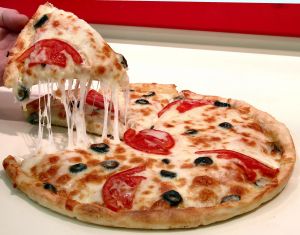
Whenever Americans are asked to name their favorite foods, pizza shows up on just about everybody’s list.

One survey shows that 93% of Americans eat at least one piece of pizza each month.

In fact, if you’re an average American, statistics show that you’ll eat about 46 slices of pizza each year!

What is it about pizza that makes it such a popular repast (see definition below)?

Some people might say it’s the thick, gooey cheese, while others may point to a chewy or crispy crust.

But perhaps you’re not a pizza lover at all. Maybe you’d rather have another American favorite food, such as a hamburger or hot dog.

Whatever you choose, just be sure that you enjoy your meal to the fullest!

Speak your mind: What’s your favorite repast, and what makes it so enjoyable?

REPAST: Meal.

I Feel Rotten!

malaise-cool-word-vocabulary-cool-word-club

Did you know that Americans suffer about one billion colds each year?

The common cold is most prevalent in the winter and during rainy season—perhaps because that’s when people spend more time indoors, where they are often in close proximity to one another and can easily spread cold germs.

You can become infected with the virus that causes a cold when someone coughs or sneezes on or near you. Touching an object, such as a doorknob, that is contaminated with the cold virus can also make you sick.

If you catch a cold, you’ll most likely feel an overall sense of malaise (see definition below), sneeze a lot and have a runny nose, scratchy throat and perhaps even a fever.

Want to know when you’re most contagious? Or the best ways to treat a cold? Go to the National Institutes of Health website: www.nlm.nih.gov/medlineplus/ency/article/000678.htm

Speak your mind: What do you think is the best way to fight the malaise of a cold?

MALAISE: A general feeling of discomfort or illness.

Do You Have a Dream?

juncture-cool-word-vocabulary-cool-word-club

Editor’s note: Monday, January 21, 2013, is Martin Luther King Day in the United States.

On August 28, 1963, Dr. Martin Luther King, Jr., delivered his “I Have a Dream” speech on the steps at the Lincoln Memorial in Washington, DC.

Witnessed by approximately 250,000 people gathered at the site and viewed on television by millions of others, this 17-minute speech marked a significant juncture (see definition below) in the civil rights movement.

Within the speech is the now-familiar line that reads, “I have a dream that one day this nation will rise up and live out the true meaning of its creed: ‘We hold these truths to be self-evident, that all men are created equal.’”

Do you have a dream of your own? Perhaps it involves personal goals or changes that you would like to see in such areas as education, government or sports.

You can post your dream at www.thekingcenter.org/dreams/share, the website of The King Center, a nonprofit resource center established by Dr. King’s wife, Coretta Scott King.

Speak your mind: Can you think of an important juncture in your own life?

JUNCTURE: A point in time, especially one that is critical.

Feeling Bored? This May Soon Follow

inertia-cool-word-vocabulary-Cool-Word-Club

Your friend sitting across from you lets out a big yawn. What do you do?

Odds are you’ll yawn, too.

Scientists have discovered that yawning is “contagious.” Simply seeing a person yawn, reading about it or even hearing the word can trigger a yawn.

Humans yawn an average of four to six times a day, according to some research. But we aren’t the only ones who yawn. Animals, including dogs, cats, tigers and hippopotamuses, also yawn.

Contrary to a once popular belief, yawning is no longer thought to reflect a need for oxygen. Although the causes of yawning have not been proven, many experts theorize that it is a signal of boredom.

So the next time you feel overcome by inertia (see definition below), watch out! You may soon find yourself in the throes of boredom, and a yawn could quickly follow.

Speak your mind: What are the best ways to motivate yourself if you feel a spell of inertia?

INERTIA: A tendency to do nothing, inactivity, continue in its existing state.

You’ve Got to Start Somewhere!

neophyte-cool-word-vocabulary-cool-word-club

Whether you’re playing a musical instrument for the first time or trying out an unfamiliar sport, it takes time to learn a new skill.

With a good teacher or coach, however, you may be able to learn the skill in a fraction of the time it would take you to teach it to yourself.

If you want to learn to play the piano, for example, private lessons from an accomplished pianist are one option. But you could also teach yourself by using videos or computer software.

The famous Austrian composer and pianist Wolfgang Amadeus Mozart was performing in public by the age of 6. His talents, however, were extremely rare. It takes most people years to learn to play the piano well.

That’s why it’s wise for a neophyte (see definition below) to make practice sessions as enjoyable as possible. That way, practice will be fun, and the time will pass quickly!

Speak your mind: What do you think is the best way for a neophyte to master a new skill?

NEOPHYTE: A beginner, novice, someone who is new to a particular skill, subject or belief.

Yikes, That’s Loud!

stridulous-cool-word-vocabulary

If you’re walking outside when an ambulance whizzes by, the sound of the siren can seem deafening. Sometimes, you may even need to cover your ears to muffle the stridulous (see definition below) racket.

Certain loud noises can actually cause hearing loss. This occurs when structures within your inner ear become damaged due to the noise. For example, sirens can reach 120 decibels (a measurement of sound intensity). At this level, hearing loss can occur in a matter of seconds.

Listening to portable music players at high volumes (above 85 decibels) for long periods can also threaten your hearing.

To play it safe, it’s a good idea to keep the volume at reasonable levels when listening to music. You can also protect your ears with earplugs or earmuffs when you’re exposed to loud noises in your surroundings.

To read more about the dangers of loud noises, consult the National Institutes of Health at: www.nidcd.nih.gov/health/hearing/pages/noise.aspx

Speak your mind: Do you encounter any loud noises that could damage your hearing?

STRIDULOUS: Shrill, harsh or grating sound.

How’s the Weather Up There?

disparity-cool-word-vocabulary

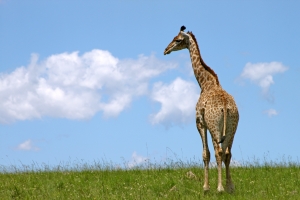
Unless you visit Africa or stop by a zoo, chances are you won’t see many giraffes.

Among the tallest living animals, giraffes can reach heights of nearly 20 feet. Surprisingly, even a newborn giraffe (known as a calf) is about six feet tall!

Giraffes are commonly known for their spotted coats and long necks, which allow them to eat leaves in tall trees. In the wild, giraffes roam freely and typically live for about 25 years.

Of course, there is a great disparity (see definition below) between the giraffe and an extremely small animal, such as a hamster or a Chihuahua.

So, the next time you take a look at dog or a cat, you might remember that animals come in many shapes and sizes!

Want to know more about giraffes? Check the Kids’ Planet website at: www.kidsplanet.org/factsheets/giraffe.html

Speak your mind: How do you think an animal’s size affects its ability to live a long life?

DISPARITY: Inequality, difference, lack of similarity.