PHILATELY For Fun!

philately-cool-words-vocabulary-for-students

In today’s world of text messaging and email, sending a letter through the mail seems rather old-fashioned.

However, plenty of people still use the Postal Service. In the US, postal employees delivered 160 billion pieces of mail last year.

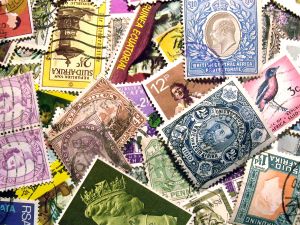
In order to send a first-class letter, all you need is a 46-cent stamp. Some people are so fascinated by postage stamps that they become involved in philately (see definition below).

In fact, there are people around the world who collect stamps as a hobby. There are no age requirements, and some collectors begin as children and continue throughout their lives.

Most philatelists collect stamps for fun, but some look for valuable stamps with interesting histories. A few extremely rare stamps have been sold for more than $1 million.

If you’d like to learn some cool vocabulary words related to philately, go to the American Philatelic Society’s website at http://stamps.org/Vocabulary

Cool word vocabulary question of the day: What do you think would be the most interesting aspect of philately?

PHILATELY: The collecting or study of stamps.

Are You Intrigued By ENTOMOLOGY?

entomology-cool-word-club-vocabulary-for-students

No one likes to get bitten by a mosquito or stung by a bee or a wasp. But that’s no reason to cringe at the sight of all insects.

There are actually more than one million different species of insects, so there could be a few that you might find intriguing.

Butterflies, for example, come in a variety of vibrant colors and are among the most beautiful. The monarch butterfly, which is bright orange, is perhaps the best recognized.

Believe it or not, butterflies have taste receptors in their feet! This is the type of knowledge that you would gain if you studied entomology (see definition below).

Butterflies are also interesting for another reason. Certain species camouflage themselves by blending in with the background to avoid getting eaten by predators, such as birds, spiders and lizards.

This is a great way to remain inconspicuous!

Cool word vocabulary question of the day: How do you imagine that you would spend your time if you became an entomologist?

ENTOMOLOGY: The study of insects.

What’s Your Level of FEALTY?

Hachiko-fealty-cool-words-vocabulary-for-students

Dogs are well known for their incredible loyalty. You’ve probably heard stories of dogs that have rescued their owners from dangerous situations or traveled long distances to be reunited with their human companions.

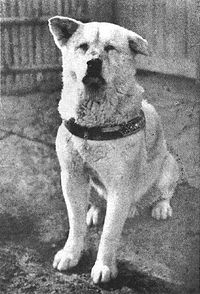
One such remarkable dog is an Akita named Hachikō. He lived in Tokyo, Japan, with his owner, a university professor. Each day, the dog greeted his owner at the train station when he returned from the university.

One day, however, the man died of a stroke and did not return to the station. But the dog continued to show up and wait for his owner at the same time of day for the next nine years. Commuters fed Hachikō, and eventually a statue was erected in the dog’s honor.

The story of Hachikō is an example of extraordinary fealty (see definition below).

Speak your mind: Are there any people or organizations to which you feel a great deal of fealty?

FEALTY: Allegiance, loyalty, fidelity.

No One Wants to Be MEDIOCRE!

mediocre-cool-words-vocabulary-for-students

“Quality control” is a term that’s often used in business, but it can apply to just about any situation.

It is a system designed to ensure that certain standards are met before products or services are provided to customers. Whether it’s a can of soda, pair of jeans or set of headphones, manufacturers periodically test samples of their products to make sure that the quality is not being compromised in any way.

But you don’t have to be a businessperson to be concerned about quality. Anyone who wants to produce the highest quality work of any kind will quickly reject anything that is mediocre (see definition below).

So whether you’re making dinner for your family or working on a homework assignment, it always pays to keep a close eye on the quality of your undertaking.

That way, you’ll be sure to do the best job you possibly can!

Speak your mind: Can you think of any products that are mediocre?

MEDIOCRE: Barely acceptable quality, not very good.

Welcome to Your LAIR!

lair-cool-words-vocabulary-for-students

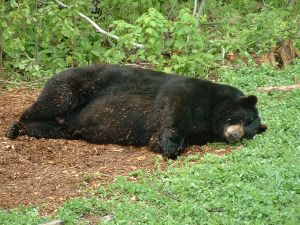
Brrr! It’s cold outside. For bears, that means it’s time to find a den for hibernation.

How does the bear do it? When a bear is “denning,” it becomes inactive and its heart rate and breathing rate slow down. These biological mechanisms allow the bear to conserve energy and survive winter food shortages.

For months at a time, the bear goes without food or water and passes no waste. During this period, the bear uses stored body fat to survive.

Even though the bear is perhaps best known for finding a lair (see definition below) to use as shelter during the harsh winter months, it’s not the only animal that practices this winter routine. Ground squirrels, chipmunks and even some snakes go into hibernation.

So the next time it’s really freezing outside, you might want to find a warm shelter of your own for hibernation!

Speak your mind: Can you think of a good location for a lair?

LAIR: Den, resting place of a wild animal, hideaway.

An ORATION That Lives On…

oration-cool-words-vocabulary-for-students

Editor’s note: Monday, Feb. 18, 2013, is Presidents’ Day in the United States.

Presidents’ Day was first established in 1885 to recognize George Washington’s birthday. Now the holiday honors all US presidents.

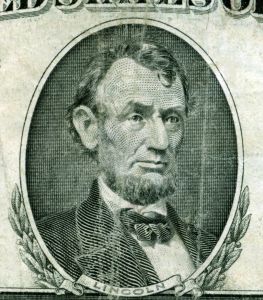
Among the presidents most widely commemorated on Presidents’ Day is Abraham Lincoln. According to many historians, he is considered the country’s greatest president, largely because of his leadership during the Civil War and for his role in abolishing slavery.

Lincoln was also known as an outstanding writer. He was said to have written his speeches out by hand and even read drafts aloud to some of his cabinet members.

However, it was Lincoln’s words rather than his strengths as a speaker that will live on. Perhaps his most famous oration (see definition below) is the Gettysburg Address, which included the line, “government of the people, by the people, for the people, shall not perish from the earth.”

With the stroke of a pen, history was made!

Speak your mind: What is your favorite oration and why?

ORATION: A formal public speech.

When PROWESS Comes in Handy

prowess-cool-words-vocabulary-students

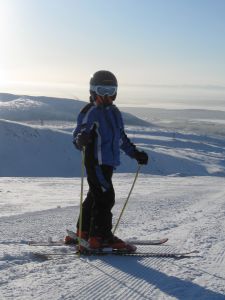
If you enjoy beautiful scenery and the thrill of a fast-paced sport, chances are you’ll love downhill skiing.

In the United States, several states have mountains that are snow-covered and perfect for skiing in the winter. Among the most popular are Colorado, Utah, California, Vermont and New York.

Most of the ski areas in these states are located at altitudes that range from about 7,000 feet to more than 12,000 feet above sea level.

Ski areas typically offer a variety of terrains for skiers of every skill level. Trails that are designed for beginners are marked with signs that display green symbols. The signs for intermediate-level trails have blue symbols, and the most difficult trails have black-diamond symbols.

If you take on one of the advanced trails, just be sure that you have prowess (see definition below) on the slopes!

Speak your mind: What activities allow you to demonstrate your prowess?

PROWESS: Expertise, exceptional ability, bravery.

Is a MODICUM Enough?

modicum-cool-words-vocabulary-students

Maybe you watch TV and talk on the phone at the same time. Or perhaps you go back and forth between a computer game and your math homework.

If either scenario applies to you, then you’re a “multitasker.” Multitasking means doing more than one thing at a time or switching back and forth from one activity to another.

In the past, people thought that multitasking was a good way to increase one’s productivity and efficiency. But that’s not true.

In fact, some research now shows that multitasking decreases productivity by about 40%. What’s more, switching back and forth between tasks makes it difficult to concentrate.

So whenever you find yourself bouncing back and forth between tasks and spending just a modicum (see definition below) of time on each one, slow down. It’s definitely better to focus on just one thing at a time!

Speak your mind: Why is it a good idea to spend more than a modicum of time completing an important task?

MODICUM:
A small amount or limited quantity.

How to Avoid PENURY

penury-cool-words-vocabulary-for-students

If you get an allowance, chances are you have to do some work in return. On average, kids do chores for about six hours a week to earn their pay.

The bad news is that only 1% of parents who give allowances say that their kids save any of that money, according to a recent survey. Kids spend most of their cash on such items as clothes, electronics and video games.

But financial experts say that it’s a good idea to get into the habit of saving—for example, before making any purchases, you could put aside about 25% of the money you bring in each month.

You can also cut back on your spending. If you spend, say, $5 a week on snacks, try reducing that to just $3 a week. With this approach, you will save $104 within a year.

Saving is an excellent way to avoid penury (see definition below)!

Speak your mind: What do you think is the best way for kids to save money?

PENURY: Lack of resources, poverty, destitution.

Are You CIRCUMSPECT?

circumspect-cool-word-vocabulary-for-students

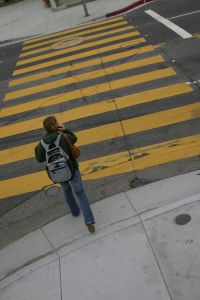
Have you ever seen someone crossing the street while listening to headphones, talking on a cell phone or texting?

That’s called “distracted walking,” and it’s a growing problem. Unfortunately, distracted walkers are so engrossed in what they’re doing that they are putting their safety at risk.

In fact, hospital emergency rooms in the US reported treating more than 1,100 people in 2011 who suffered injuries after using a cell phone or some other electronic device while walking, according to the Consumer Product Safety Commission.

So the next time you feel that you must make a call or text a friend, be circumspect (see definition below) and make sure that you’re not walking when you do it!

Speak your mind: What do you think is the best way to prevent injuries from “distracted walking”?

CIRCUMSPECT: Prudent, watchful, unwilling to take risks.