
“Hair Today”…Gone Tomorrow?

Hirsute | Vocabulary from the Cool Word Club

Here’s a fun question: Do you know many hairs the average person has on his/her head?

The exact number varies from person to person, but a good estimate is about 100,000 to 150,000. That’s a lot of hair! Interestingly, a person’s hair color is believed to play a role in the number of hairs on his/her head. For example, blondes are estimated to have about 140,000 strands of hair, people with brown hair have an average of 108,000 strands and redheads have approximately 90,000 strands of hair on their heads.

Of course, all that hair just keeps on growing. For most people, the hair on their heads grows about a half inch a month. That’s good news for haircutters!

Some people, however, prefer to let their hair grow long. According to the Guinness World Records, the world’s longest documented hair belongs to Xie Qiuping of China, whose hair was measured at more than 18 feet long!

That, you could say, is one hirsute (see definition below) individual!


Speak your mind: What do you consider to be the most appropriate length for a person to grow his/her hair?

HIRSUTE: Hairy.


When Words Aren’t Enough…

Gesticulate | Vocabulary from the Cool Word Club

Sometimes you can communicate a great deal without even using words.

If you’re giving a speech to an audience, for example, or just having a casual conversation with a friend, you may want use your hands or another part of your body, such as your head, to drive home an important point.

Some of the most common gestures that Americans use in daily life include giving someone a “thumbs-up” or “thumbs-down” sign or a “high-five.” Nodding one’s head in agreement is another widely used form of nonverbal communication.

It’s important to remember, though, that certain gestures that are well known in the United States may have different meanings in other parts of the world. If an American gives another person a thumbs-up sign, for example, this will likely signify approval. In other areas of the world, such as Thailand and parts of the Middle East, this same gesture is sometimes used in a disrespectful manner or as a form of mockery.

So if you are inclined to gesticulate (see definition below) when communicating with someone from another country, just make sure that your gesture means the same thing to both of you!


Speak your mind: What gestures do you find to be the most effective when you are communicating an important message?

GESTICULATE: To use gestures for emphasis, especially when speaking.


“Don’t Worry, Be Happy!”

Pithy | Vocabulary from the Cool Word Club

The 18th-century French philosopher Voltaire has been widely credited with saying, “Common sense is not so common.”

Some people might say that this is a good example of a pithy (see definition below) statement. But you don’t have to be a philosopher to state things in a brief, direct and memorable way.

“Don’t worry, be happy!” is a pithy slogan that virtually everyone has heard.

There are also plenty of pithy quotes that embody a concise statement of truth or principle. These are known as aphorisms. “It’s easier said than done,” for example, is an aphorism.

So what does all of this prove? Perhaps there’s some truth to the well-known quote: “It’s not what you say, it’s the way you say it!”


Speak your mind: Can you think of a pithy statement that is particularly meaningful to you?

PITHY: Spoken or written language that is brief and forcefully expressive or meaningful.


I Feel…

Tetchy | Vocabularly from the Cool Word Club

You probably already know that IQ (intelligence quotient) is one way to gauge a person’s intellectual abilities. But what does an EQ (emotional quotient) tell about a person?

EQ refers to your ability to recognize and manage your emotions. Having a high EQ comes in handy when you’re interacting with your friends and teachers at school. It allows you to stay calm, for instance, in stressful or frustrating situations.

One of the most unpleasant emotions to experience is anger. It may cause your jaw to tighten or your heart to pound in your chest. In addition to anger, other common emotions include joy, surprise, fear and guilt.

Sometimes, though, you may just say that you’re in a “bad mood.” Perhaps you even do something that’s out of character for you, such as lash out at someone who accidentally bumps into you on the street. In this situation, an observer could say that you are being quite tetchy (see definition below).


Speak your mind: What emotions do you experience most often, and are there any that you would like to manage more effectively?

TETCHY: Irritable, bad-tempered, touchy.


Sign Here, Please…

Covenant | Vocabulary from the Cool Word Club

It’s common to shake hands when you agree to do something—perhaps help a neighbor with yard work or sell one of your possessions to a friend.

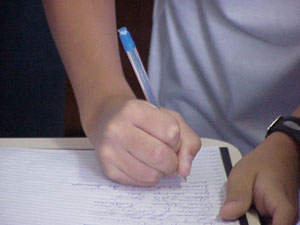
If you’re making a more formal agreement, however, you may want to enter into a written covenant (see definition below) that stipulates the details of the compact. A document is drafted, and both parties sign it to confirm that they have agreed upon the terms.

A covenant can also be useful if you simply want to put a promise in writing–that you will complete your homework assignments on time, for example, or clean your room once a week. You can write out what you intend to do, and both you and your parent can sign it.

With the covenant in hand, there can be no confusion about the terms of your agreement!


Speak your mind: Are you involved in any activities that could benefit from a covenant?

COVENANT: A formal, binding agreement that is often written.


Not Enough ZZZs?

Supine | Vocabulary from the Cool Word Club

If you’re like most young people, you probably don’t get enough sleep.

Teenagers need approximately nine hours of sleep per night, but some research shows that only about 15% of young people regularly get that much.

What happens if you don’t get enough sleep?

For one thing, you may feel groggy the next morning if you got a poor night’s sleep. Lack of sleep also leads to other problems—it can make you irritable, interfere with your ability to concentrate and learn new material at school, increase your chances of getting sick and even make you more susceptible to acne!

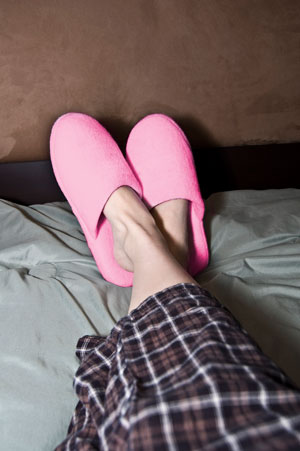
If you’re not getting enough sleep, naps can sometimes help. For someone who is sleep deprived, it feels great to stretch out in a supine (see definition below) position and catch some much-needed ZZZs. Just make sure that you don’t nap for too long or drift off to sleep close to your bedtime. Otherwise, you may compound your problem by not being able to sleep that night!


Speak your mind: What do you think is the best solution for someone who doesn’t get enough sleep?

SUPINE: Lying flat on one’s back with the face up.


Just Pitch It!

Sully | Vocabulary from the Cool Word Club

When it comes to litter, there’s good news and bad news. The good news is that roadside litter has decreased by about 61% over the past four decades in the United States. The bad news is that people are now littering more plastic items than ever before. All told, more than 51 billion pieces of litter appear on US roadways each year.

Motorists and pedestrians are the most common culprits, but roadways aren’t the only target. Litter is often found near bus stops and entrances to public places, such as movie theaters and retail stores.

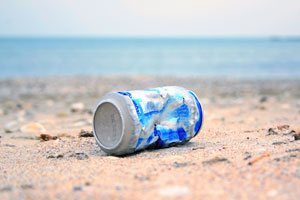
Sadly, some people also discard their trash in parks and on beaches. Even a single soda can or an empty potato chip bag will sully (see definition below) the beauty of a tree-filled park or a sandy beach.

Maybe you can help. Can you think of a slogan that might stop people from littering so much?

Or perhaps you’d like to volunteer your time to help reduce litter. If so, you can contact an affiliate of Keep America Beautiful.


Speak your mind: Why do you think people litter, and what is the best way to correct this problem?

SULLY: To soil, defile or damage the integrity or purity of.


Beware of Sandy, et al

Alluvion | Vocabulary from the Cool Word ClubA hurricane is a massive storm. If you’ve never experienced one, it’s hard to imagine the sheer force of the winds. In a hurricane, winds gust at speeds of 75 mph and higher. When the wind is blowing at those speeds, it can be difficult to even stand without losing your balance!

One of the most damaging elements of a hurricane is the storm surge. This occurs when the storm builds strength and pushes huge amounts of water against the coastline. The result is often an alluvion (see definition below) that can wreak havoc by destroying people’s property, including their homes and cars. Flood and wind damage can total billions of dollars. The destruction can also result in fatalities.

Here’s an interesting fact: Hurricanes used to be designated by their latitude-longitude, but then authorities decided that it was simpler for the public to remember these storms by giving them names. For Atlantic hurricanes, both female and male names—such as Sandy, Katrina and Andrew—are recycled every six years.

To see the names that are used for hurricanes, visit the National Weather Service’s website, www.nhc.noaa.gov/aboutnames.shtml


Speak your mind: What do you think would be the best way to prepare for an alluvion or any other weather-related emergency?

ALLUVION: Flood, overflow or the wash of water against a shore.


Gooey = Good!

Glutinous | Vocabulary from the Cool Word Club

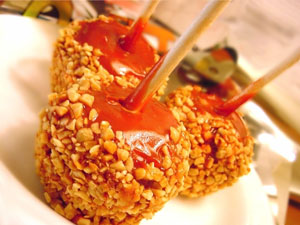
When it comes to sweets, lots of people think the gooier, the better. In fact, sometimes candy is so glutinous (see definition below) that it feels almost like glue.

Candy apples and caramel apples are good examples. They’re popular in many parts of the world, including Germany, France, Japan and Brazil.

In the United States, a Newark, New Jersey, candy-maker named William H. Kolb is believed to have invented the delicious treat in 1908. Hoping to discover a new Christmas sweet, he dipped apples in a sugary mixture of red cinnamon candy. It was reported that he sold that first batch for just 5 cents each!

The important thing to remember, though, when you’re eating any glutinous treat is not to become gluttonous!


Speak your mind: What is the most interesting thing you can think of that is glutinous?

GLUTINOUS: Sticky, having a texture like glue.


Beep, Beep…Beep, Beep!

Cacophony | Vocabulary from the Cool Word Club

We’ve all heard about air pollution, but there’s another type of pollution that doesn’t get quite as much attention in the press. It’s called noise pollution.

Noise pollution occurs when humans, machines or even animals make so much noise that it interferes with our normal activities and quality of life. Noise pollution is also a problem because it can harm our health by contributing to high blood pressure, hearing loss and sleep difficulties.

What’s the solution?

You can wear earplugs to muffle the sound. Or you can avoid areas where there’s lots of noise. However, there’s a good chance that you won’t be able to avoid noisy areas all the time.

For example, if you spend time in a big city, where traffic jams are a regular occurrence, you’re likely to hear a cacophony (see definition below) of car horns. Some cities even have laws now to help control excessive noise levels.

Do you have any idea which cities are considered the noisiest in the world?

According to travel experts, the cities where you’re most likely to get an earful of loud sounds include Mumbai, Madrid, New York City, Buenos Aires and Cairo.


Speak your mind:  Is there anything near your hometown that produces a particular cacophony?

CACOPHONY: Harsh, jarring, discordant noise.